Document Processing: from paper to digital workflows
Automate, classify and streamline all your documents with local expertise and 25+ years of experience.
Schedule a no-obligation consultation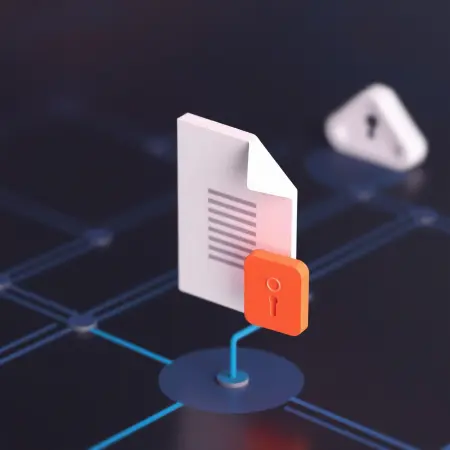
Intelligent document processing
AI-driven IDP software that understands documents, not just reads them
Document classification
Automatically sort and categorise with AI accuracy
Document workflows
Automated routing, approval and archiving
Scan and recognise
OCR technology that makes every document digitally accessible
What is document processing?
Document processing encompasses all activities required to receive, recognise, classify, process and archive documents. From a simple invoice to a complex contract: every document goes through a journey from arrival to final storage or action.
Why automate document processing?
Organisations process hundreds to thousands of documents every day. Manual processing not only costs time, but also introduces errors and compliance risks. Modern document processing solves these problems.
Save time – What takes hours manually, software processes in seconds. Employees can focus on work that truly matters.
Eliminate errors – AI makes no typos, forgets no fields and works consistently.
Ensure compliance – Automatic audit trails, access control and retention policies ensure you comply with GDPR and sector-specific regulations.
Reduce costs – Fewer manual actions means lower operational costs.
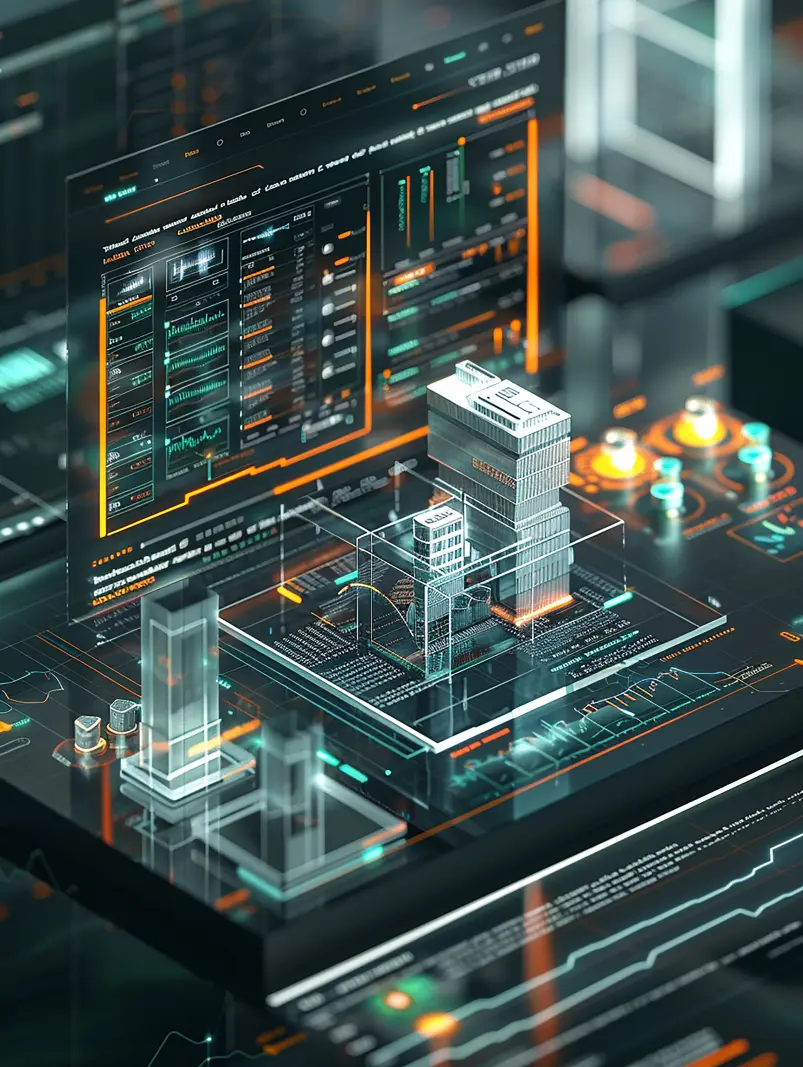
The image alongside illustrates what a modern document processing workflow looks like: incoming documents are automatically analysed by AI algorithms that recognise patterns, extract data and trigger workflows. The visual dashboard provides real-time insight into processing statuses, error rates and throughput times. This gives decision-makers a constant grip on the process, from the first scan to the final entry in the ERP system.
How document processing works
From incoming document to structured data in five steps
Receive
Document arrives via scan, email, upload or API
Recognise
OCR reads text, AI recognises document type and structure
Classify
Automatically categorise and route to the correct workflow
Process
Extract, validate and forward data to systems
Archive
Secure storage with metadata and search functionality
Document processing solutions
From intelligent recognition to automated workflows: discover which solution fits your document challenge.
Intelligent Document Processing (IDP)
AI-driven document processing that goes beyond OCR. Our IDP solutions understand context, extract data and trigger workflows automatically.
Document automation
Transform manual document processes into automated workflows. From generation to distribution.
Document classification
AI that automatically sorts and categorises documents. Invoices, contracts, correspondence: every document in the right place.
Document workflow
Automated document flows with intelligent routing, approval processes and escalations.
Curious what document processing can mean for your organisation?
Schedule a no-obligation conversation with one of our specialists. We discuss your challenges and explore the possibilities.
Technology and software
The right technology for every document type. From OCR engines to complete processing platforms.
Scan and recognition software
OCR technology that converts paper documents into searchable digital files.
Scan and recognition vendors
Compare the best OCR vendors and find the solution that matches your requirements.
Document software
Complete software solutions for document management, from DMS to capture platforms.
OCR software
Optical Character Recognition that extracts text from images and scans.
ESV Platform
Our own document processing platform: flexible, scalable and fully customisable.
EasyVerify
Human-in-the-loop validation for documents requiring extra control.
OCR API
RESTful API for direct integration of OCR functionality into your own applications.
PDFCommunicator
Convert, split and combine PDF files with advanced processing options.
Handwriting recognition
AI-driven recognition of handwritten text on forms, notes and documents.
From document to action
Document processing is not an end in itself. The value lies in what you do with it: faster invoice payments, better customer service, fewer compliance risks. At EasyData we ensure that documents do not sit idle but immediately trigger action.
Our approach combines deep technical expertise with practical implementation. We help not only with digitisation, but also with integration into your existing work processes. From ERP connections to workflow automation.
Too often we see organisations that scan documents but then continue to process them manually. That is why we guide the entire journey: from paper to process optimisation.
Our implementation approach: We start with a no-cost Proof of Concept on your real documents. This way you see concrete results before you invest. Typical implementation takes 6-8 weeks to production.
The floating documents in the image alongside symbolise exactly this transition: physical documents breaking free from their paper limitations and entering a digital world where they are immediately available, searchable and processable. Every organisation that takes this step notices the difference immediately: faster throughput times, fewer errors and employees who finally have time for work that truly matters.
Transformation and digitalisation
From paper archive to digital future. Strategic transformation for long-term value.
Digital document transformation
Strategic approach for organisation-wide digitisation of document processes.
Archive transformation
Digitise historical documents and legacy archives for modern accessibility.
Digital transformation
Broader perspective on digital transformation with documents as the foundation.
Data capture
Automated data extraction from documents, forms and external sources.
Process automation
End-to-end automation of business processes where documents take centre stage.
Workflow software
Platforms for designing and managing document-centric workflows.
Document processing in practice
Real-world examples from our 25+ years of experience across diverse sectors.
Government and public sector
Permits, property assessments, civil affairs and archive digitisation. Financial Search for fraud detection and processing of objection letters.
Healthcare and welfare
Patient records, declarations, prescriptions and medical correspondence. GDPR-compliant processing with extra attention to privacy.
Financial services
Mortgage applications, KYC documentation, policies and claims forms. Fast processing for a better customer experience.
Transport and logistics
CMRs, bills of lading, packing slips and customs documents. Real-time processing for integration with TMS and WMS. See also transport document recognition.
Industry and manufacturing
Technical drawings, quality certificates and maintenance documentation. Legacy digitisation and CAD integration.
Accountancy and administration
Invoice processing, receipts, bank statements and annual accounts. Bulk processing with direct accounting integration.

Why choose EasyData?
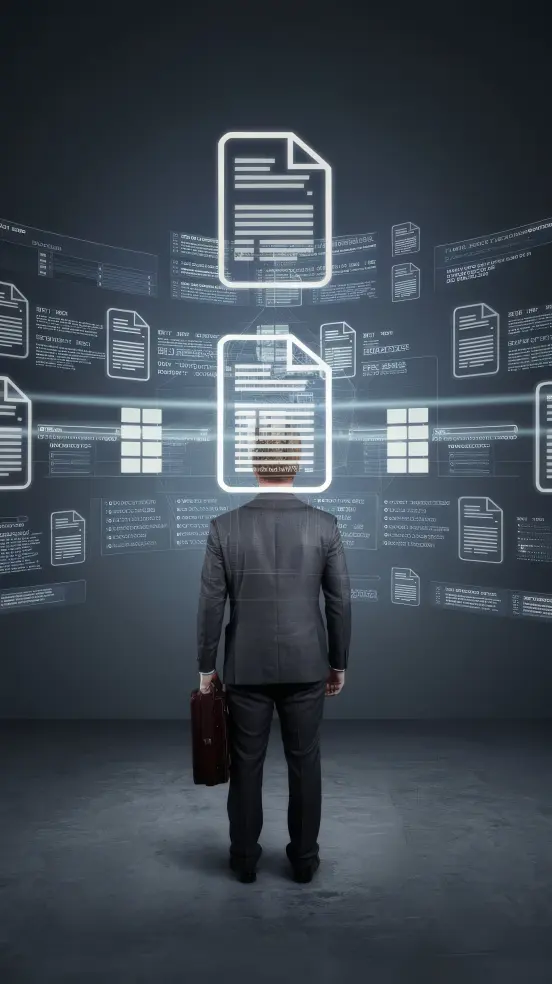
For 25+ years we have been helping organisations with document processing and automation. Our approach combines deep technical expertise with practical implementation. The image alongside shows how data from diverse document sources comes together in a structured overview: invoice data, contract information and correspondence are merged into a complete picture that is immediately usable for analysis and decision-making.
Ready to transform your document processing?
Schedule a no-obligation conversation with one of our document specialists.
What you can expect
No-cost Proof of Concept – Test with your real documents
6-8 week implementation – From first conversation to production
No vendor lock-in – Open standards, your data stays yours
Personal guidance – Experienced specialists as your dedicated contact
Frequently asked questions about document processing
What does automating document processing cost?
Costs vary depending on document volume, complexity and desired integrations. We work with transparent pricing models and always provide a concrete indication after an initial conversation. Most projects pay for themselves through time savings and error reduction. Start with a no-cost PoC.
Which document types can you process?
Virtually all document types: invoices, contracts, quotations, orders, forms, technical drawings, correspondence and more. We work with PDF, Word, Excel, images and scanned documents. Our OCR technology recognises text with high accuracy, including handwritten notes.
How accurate is automated document processing?
Modern systems achieve high accuracy on structured documents. For more complex documents, our EasyVerify human-in-the-loop validation handles exceptions. The AI learns from corrections, so accuracy continuously improves.
How long does an implementation take?
Typically 6-8 weeks from first conversation to production. We always start with a no-cost Proof of Concept (1-2 weeks). Complex custom projects can take 3-6 months depending on integrations.
Do you integrate with existing systems?
Yes, extensive experience with SAP, Microsoft Dynamics, and dozens of other systems. Our API-first approach and business connector make integration with virtually any system possible.
Is document processing GDPR-compliant?
All processing takes place on servers within Europe. We operate according to ISO 27001 guidelines and sign a data processing agreement as standard. Registered with the Dutch Data Protection Authority under number FG001914.
Can I also run on-premise?
Yes. Cloud (in European data centres), hybrid and fully on-premise. For organisations with strict security requirements we also deploy Azure disconnected containers. Read more about data sovereignty.
About the author